
Sound enters
Sound waves travel through the ear canal and move the eardrum.
Understand inner-ear hearing loss, recognise its symptoms and explore professional diagnosis, hearing aids and rehabilitation options that can improve everyday communication.
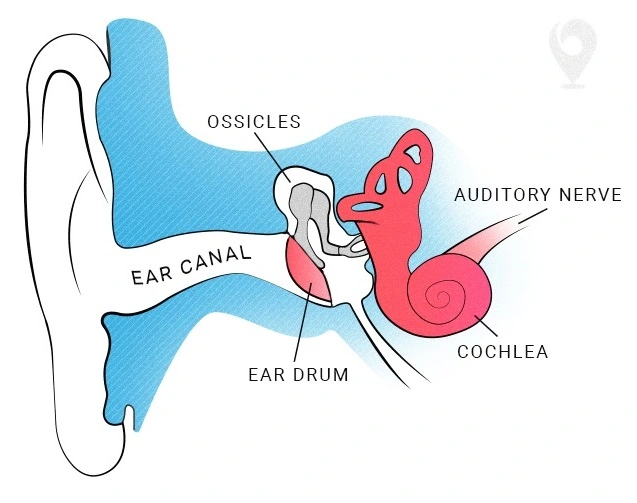
Sensorineural hearing loss (SNHL) occurs when sensory cells in the cochlea, nerve fibres in the inner ear, or the auditory pathway are damaged. It may affect one ear or both and can range from mild to profound.
People may hear that someone is speaking but struggle to understand the words—particularly in restaurants, meetings or other noisy environments. Unlike many conductive problems, established SNHL is commonly permanent, but properly selected technology and communication support can make a meaningful difference.
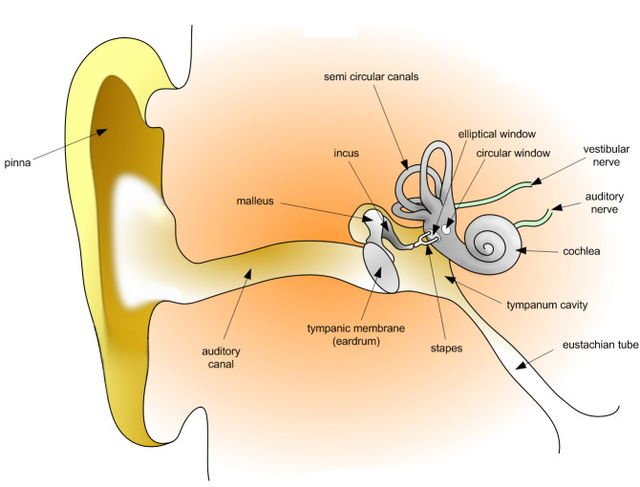
Sound waves travel through the ear canal and move the eardrum.
Middle-ear bones transmit vibration toward the cochlea.
Inner-ear sensory cells convert vibration into electrical signals.
The auditory nerve carries signals that the brain recognises as sound.
SNHL can develop gradually or occur suddenly. A professional assessment helps distinguish the pattern and identify when medical referral is needed.
Presbycusis usually develops gradually and often affects higher-frequency sounds and speech clarity.
Repeated loud sound or a single intense noise may damage delicate sensory cells in the cochlea.
Inherited conditions may affect hearing from birth or contribute to loss later in life.
Certain medicines can affect hearing. Never stop prescribed medication without consulting the treating doctor.
Some viral, autoimmune, metabolic or inner-ear disorders can be associated with sensorineural loss.
Injury and sudden pressure or sound exposure may damage inner-ear structures or neural pathways.
Symptoms differ by degree and frequency pattern. Even mild loss can make listening tiring in complex environments.
Words can seem muffled or distorted even when the overall volume feels loud enough.
Restaurants, family gatherings and group discussions become especially challenging.
You may increase volume more often or favour one ear during phone calls.
Children's voices, birds, doorbells or consonants such as “s” and “f” may be harder to hear.
Ringing, buzzing or other internal sounds may accompany hearing loss.
Concentrating on conversation can require more effort and leave you mentally tired.
Pure-tone audiometry measures the softest sounds heard at different pitches. Air- and bone-conduction thresholds typically reduce together in sensorineural loss, without a clinically significant air–bone gap.
The clinician reviews symptoms, noise exposure, medicines and medical history, then checks the ear canal.
Headphone, bone-conduction and speech tests help establish the type and functional impact of the loss.
Your audiologist explains the audiogram and recommends medical referral, hearing technology or monitoring.
There is no single solution for every person. Recommendations depend on the cause, degree of loss, speech understanding, lifestyle and medical findings.
Professionally fitted devices can improve access to speech and important environmental sounds.
Specialist teams may assess severe or profound loss when appropriately fitted hearing aids provide limited benefit.
Remote microphones, TV streamers, captions and alerting devices support specific listening situations.
Auditory training, counselling, family strategies and regular follow-up improve day-to-day outcomes.
The location of the problem changes the audiogram pattern and the care pathway.
| Type | Where it occurs | Typical examples | Possible care pathway |
|---|---|---|---|
| Conductive | Outer or middle ear | Wax, fluid, infection or eardrum/middle-ear conditions | Medical assessment, treatment or hearing technology |
| Sensorineural | Cochlea or auditory nerve | Age, noise, genetics, illness or ototoxic exposure | Hearing aids, rehabilitation or implant assessment |
| Mixed | Conductive and sensorineural components together | A middle-ear condition combined with inner-ear loss | Medical treatment plus hearing rehabilitation as indicated |
Our hearing care team provides audiometry, hearing-aid consultation, personalised fitting and ongoing support in Gurgaon. A complete assessment helps you understand your hearing before choosing a solution.
Established SNHL is commonly permanent because damaged inner-ear sensory cells do not normally regenerate in humans. Appropriate hearing technology and rehabilitation may substantially improve communication.
Most long-standing SNHL is not cured with medicine. Sudden sensorineural hearing loss is different and requires urgent medical assessment because time-sensitive treatment may be recommended.
Assessment commonly includes an ear examination, pure-tone air- and bone-conduction audiometry and speech testing. Tympanometry or specialist medical investigations may also be advised.
Yes. Childhood SNHL may be associated with genetic factors, infection, birth-related conditions or other causes. Early specialist assessment supports speech, language and learning development.
Many people benefit from hearing aids, particularly when devices are selected and programmed for their audiogram and listening needs. Benefit also depends on speech-recognition ability and consistent use.
Some forms remain stable while others progress. Regular hearing reviews can track changes and keep hearing technology appropriately adjusted.
Seek medical advice for sudden loss, one-sided or strongly asymmetric hearing, ear pain or discharge, severe dizziness, neurological symptoms, or any concern identified during audiological assessment.
Share your details and our hearing care specialist will send current prices and help you compare the right options.