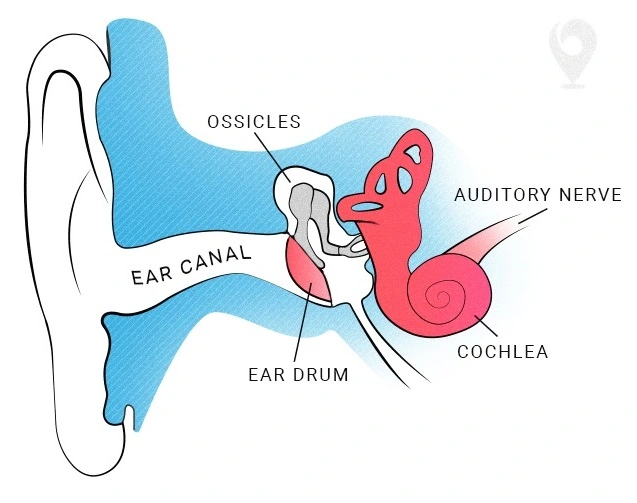
Sensorineural Hearing Loss (SNHL) occurs when the delicate structures of the inner ear or the auditory nerve are damaged. This type of hearing loss often makes sounds seem muffled or distorted, especially in noisy environments. Unlike conductive hearing loss, SNHL is usually permanent, but with the right treatment and hearing devices, individuals can significantly improve their quality of life.
Gradual deterioration of the inner ear cells due to aging.
Prolonged exposure to loud sounds damages the hair cells in the cochlea.
Inherited conditions that impact hearing function.
Difficulty understanding conversations, especially in noisy places.
Frequently increasing TV or music volume.
Trouble following group discussions.
Sounds may seem unclear or distorted.
An audiogram hearing test measures the softest sounds a person can hear across different sound frequencies (typically 250β8,000 Hz). In sensorineural hearing loss, both air and bone conduction thresholds drop together. This pattern helps audiologists confirm the type and severity of hearing loss.
In sensorineural hearing loss there is usually no significant airβbone gap. If a gap appears, it may indicate conductive or mixed hearing loss.
You wear headphones while responding to the faintest sounds you hear.
A small bone vibrator behind the ear checks inner ear function directly.
Your audiologist explains the results and recommends the best hearing solution.

Advanced digital aids improve clarity and speech understanding.
For severe to profound cases where hearing aids are not effective.
Tools that help in classrooms, meetings, or other specific environments.
Protect ears from noise, attend regular check-ups, and follow therapy sessions.
Elite Listen specialists are here to guide you towards better hearing health. Book your consultation today.
Contact UsHearing loss can occur in different parts of the ear. Understanding the differences between conductive hearing loss, sensorineural hearing loss, and mixed hearing loss helps determine the most effective treatment and hearing care solution.
| Type of Hearing Loss | Where the Problem Occurs | Common Causes | Treatment Options |
|---|---|---|---|
| Conductive Hearing Loss | Outer ear or middle ear | Earwax buildup, middle ear infections, fluid behind the eardrum, perforated eardrum | Medical treatment, earwax removal, minor procedures |
| Sensorineural Hearing Loss | Inner ear (cochlea) or auditory nerve | Aging, loud noise exposure, genetics, inner ear damage | Digital hearing aids or cochlear implants |
| Mixed Hearing Loss | Combination of outer/middle ear and inner ear damage | Ear infections with inner ear damage, otosclerosis, aging combined with conductive problems | Medical treatment plus hearing aids depending on diagnosis |