EliteListen Hearing Care

Mixed Hearing Loss

Mixed hearing loss occurs when both conductive hearing loss and sensorineural hearing loss are present at the same time. This means sound is both blocked in the outer or middle ear and the inner ear or auditory nerve is also damaged. Early diagnosis and professional hearing evaluation can help identify the best treatment or hearing aid solution.

๐Ÿ“ž Call Now for Free Hearing Test

What is Mixed Hearing Loss?

Mixed hearing loss is a combination of conductive hearing loss and sensorineural hearing loss. This means there is both a blockage in the outer or middle ear and damage in the inner ear (cochlea) or auditory nerve.

Because two types of hearing problems occur together, mixed hearing loss often requires a comprehensive audiological evaluation to determine the best treatment plan.

  • Can affect one or both ears.
  • Combination of conductive and sensorineural hearing loss.
  • Often diagnosed through a professional audiogram hearing test.
  • Treatment may include medical care and hearing aids.
Mixed hearing loss diagram showing conductive and sensorineural hearing damage

Common Causes of Mixed Hearing Loss

Mixed hearing loss develops when conditions affecting the outer or middle ear occur together with damage in the inner ear. Identifying both causes helps audiologists recommend the right treatment and hearing solution.

Earwax Blockage

Excess earwax may block the ear canal while the inner ear already has hearing damage.

Middle Ear Infections

Chronic ear infections can cause conductive problems while inner ear damage leads to sensorineural hearing loss.

Otosclerosis

Abnormal bone growth in the middle ear combined with inner ear damage can result in mixed hearing loss.

Inner Ear Damage

Aging, noise exposure, or genetics can damage the cochlea while middle ear conditions also affect sound conduction.

Eardrum Damage

A perforated eardrum combined with inner ear damage can contribute to mixed hearing loss.

Age Related Hearing Loss

Age-related sensorineural hearing loss combined with middle ear issues can create mixed hearing loss.

Symptoms of Mixed Hearing Loss

People with mixed hearing loss experience symptoms of both conductive and sensorineural hearing loss.

1. Muffled Hearing

Speech may sound unclear or distorted.

2. Difficulty Understanding Speech

Especially in noisy environments or group conversations.

3. Ear Fullness

A blocked or pressured feeling inside the ear.

4. Tinnitus

Ringing or buzzing sounds in the ears.

5. Difficulty on Phone Calls

Understanding speech over the phone becomes harder.

6. Increasing TV Volume

People often increase TV or phone volume to hear clearly.

How an Audiogram Helps

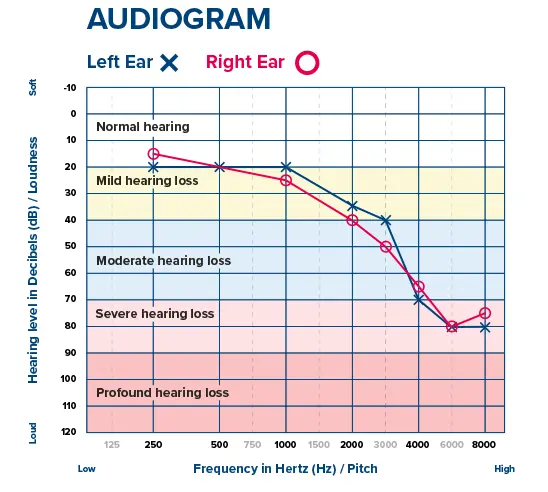
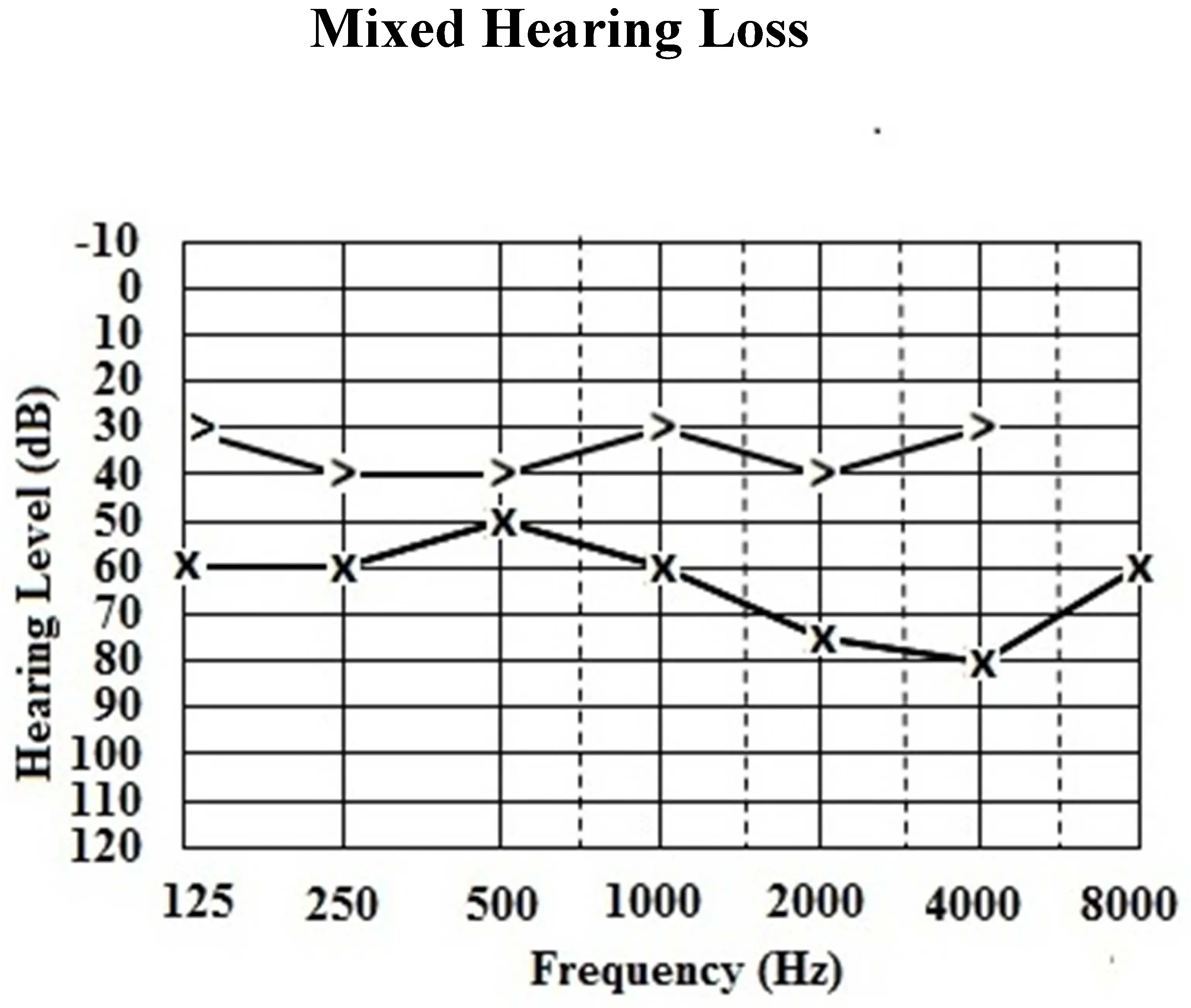
A pure-tone audiometry test measures the softest sounds you can hear at different pitches. In conductive loss, the inner ear often hears better than what reaches it โ€” this shows up as an air-bone gap. Your clinician uses the pattern to confirm the type of loss and plan treatment.

  • Determines degree: mild, moderate, severe, or profound.
  • Distinguishes between conductive, sensorineural, or mixed loss.
  • Guides next steps: medical care, minor procedure, or hearing devices.
Audiogram example

Mild & Moderate Mixed Hearing Loss

Mild Mixed Hearing Loss: Soft speech, whispers, or distant sounds may become difficult to hear clearly. People often notice trouble understanding conversations in noisy environments.

Moderate Mixed Hearing Loss: Everyday conversations may sound muffled or unclear, and individuals may frequently increase the TV or phone volume. Because mixed hearing loss involves both conductive and sensorineural components, treatment may include medical care along with properly fitted hearing aids.

A professional audiogram hearing test helps audiologists determine the severity and recommend the best treatment or hearing aid solution.

Audiogram showing mild to moderate mixed hearing loss pattern

Types of Hearing Loss: Conductive vs Sensorineural vs Mixed

Hearing loss can occur in different parts of the ear. Understanding the differences between conductive hearing loss, sensorineural hearing loss, and mixed hearing loss helps determine the most effective treatment and hearing care solution.

Type of Hearing Loss Where the Problem Occurs Common Causes Treatment Options
Conductive Hearing Loss Outer ear or middle ear Earwax buildup, middle ear infections, fluid behind the eardrum, perforated eardrum Medical treatment, earwax removal, minor procedures
Sensorineural Hearing Loss Inner ear (cochlea) or auditory nerve Aging, loud noise exposure, genetics, inner ear damage Digital hearing aids or cochlear implants
Mixed Hearing Loss Combination of outer/middle ear and inner ear damage Ear infections with inner ear damage, otosclerosis, aging combined with conductive problems Medical treatment plus hearing aids depending on diagnosis

Mixed Hearing Loss Treatment in Gurgaon

EliteListen Hearing Aid Clinic provides professional hearing tests and advanced hearing aid solutions for mixed hearing loss in Gurgaon and Delhi NCR. Our certified audiologists diagnose complex hearing conditions using modern audiology equipment and recommend the most effective treatment options.

At EliteListen, patients receive comprehensive hearing care including audiogram testing, expert audiologist consultation, and personalized hearing aid fitting from leading global brands. Early diagnosis of mixed hearing loss can significantly improve hearing clarity and communication in daily life.

  • Comprehensive hearing evaluation
  • Advanced digital hearing aids
  • Certified audiologists
  • Personalized hearing solutions
๐Ÿ“ž Call Now for Hearing Test

Mixed Hearing Loss Treatment Options

  • Medical treatment: Treating outer or middle ear problems such as ear infections, earwax buildup, or fluid in the middle ear can improve the conductive component of mixed hearing loss.
  • Medical procedures: In some cases, treatments such as eardrum repair, ventilation tubes, or middle ear surgery may help restore sound transmission.
  • Digital hearing aids: Because mixed hearing loss also involves inner ear damage, properly fitted hearing aids are often recommended to improve hearing clarity and speech understanding.
  • Comprehensive hearing care: Audiologists evaluate both the conductive and sensorineural components through an audiogram hearing test to determine the most effective treatment plan.

Concerned About Mixed Hearing Loss?

If speech sounds muffled or conversations feel difficult to follow, a professional hearing test can help identify the cause. Visit EliteListen Hearing Care for a complete evaluation by certified audiologists.

๐Ÿ“ž Call Now for Free Hearing Test

Safe โ€ข Painless โ€ข Takes Only 15โ€“20 Minutes

Early diagnosis prevents long-term issues. Weโ€™ll run a full hearing check and explain your results in plain language.

Call to Book Now

Frequently Asked Questions About Mixed Hearing Loss

What is mixed hearing loss?

Mixed hearing loss occurs when a person has both conductive hearing loss and sensorineural hearing loss at the same time. This means sound is both blocked in the outer or middle ear and the inner ear or auditory nerve is also damaged.

What causes mixed hearing loss?

Mixed hearing loss usually develops when a middle ear problem such as ear infections, fluid buildup, or earwax blockage occurs together with inner ear damage caused by aging, noise exposure, or genetics.

Is mixed hearing loss permanent?

The conductive component of mixed hearing loss may sometimes be treated medically, but the sensorineural part is usually permanent. Audiologists often recommend hearing aids or other hearing solutions to improve hearing clarity.

How is mixed hearing loss diagnosed?

Mixed hearing loss is diagnosed through a professional audiogram hearing test. The test measures both air conduction and bone conduction hearing levels to identify the presence of both conductive and sensorineural hearing loss.

Can hearing aids help with mixed hearing loss?

Yes. Modern digital hearing aids can significantly improve hearing ability for people with mixed hearing loss. Audiologists may also treat any conductive issues while recommending hearing aids for the sensorineural component.

When should I get a hearing test?

If you notice symptoms such as muffled hearing, difficulty understanding speech, or increasing TV volume, you should schedule a professional hearing test. At EliteListen Hearing Care, certified audiologists provide comprehensive hearing evaluations and personalized hearing solutions.
WhatsApp
Download Price List
๐Ÿ’ฌ WhatsApp ๐Ÿ“ž Call Now